Gallery of works
All of your work, not just what fits in the room.
Esta página también está en español.
The label gives the title. The code tells the piece.
And sells it, without anyone having to go and find the gallerist.

On the wall label, on the stretcher, in the exhibition catalogue. Each one with its own code and its own numbers.
All of your work, not just what fits in the room.
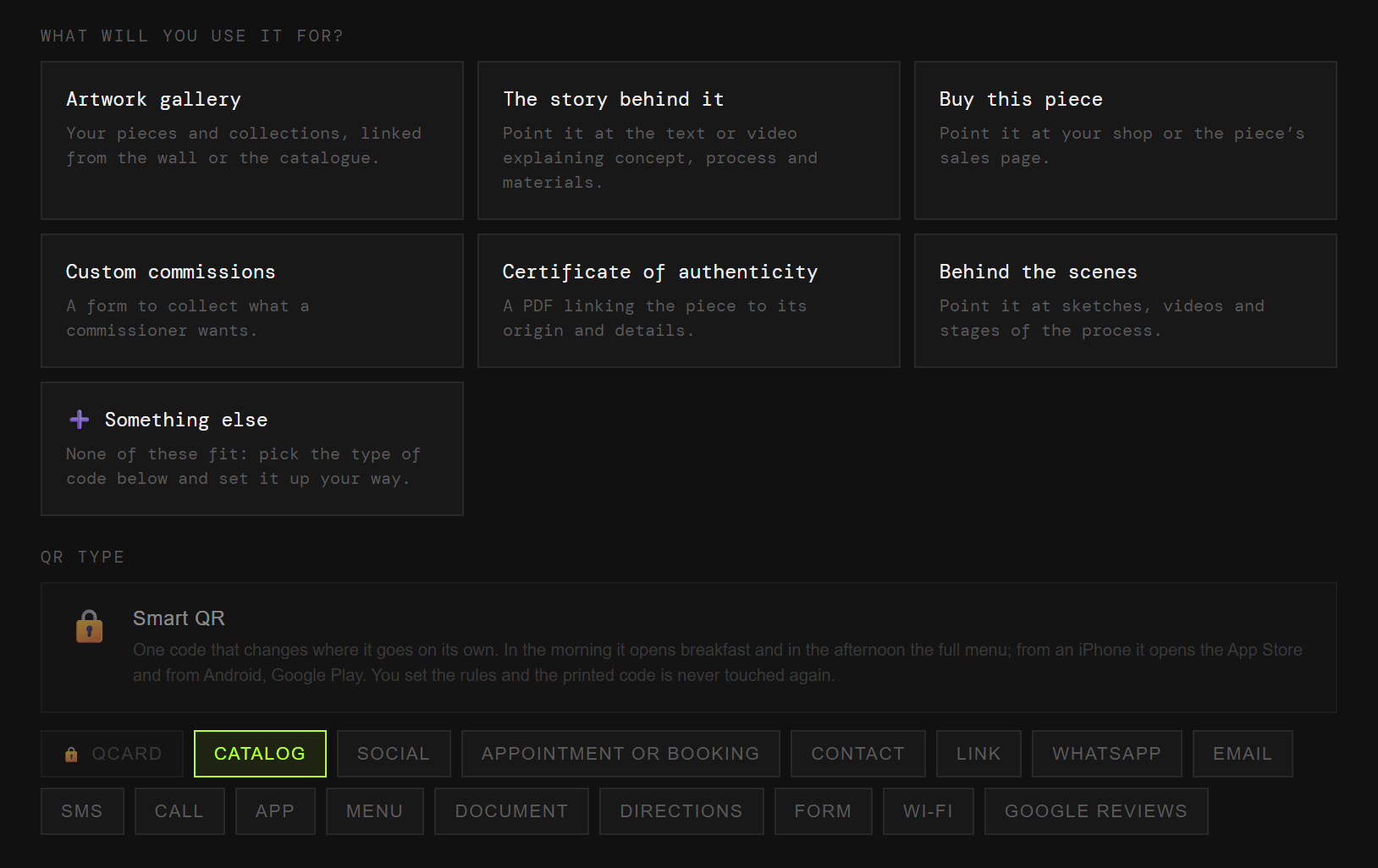
Why you made it. That is what turns looking into wanting.
Straight to the sale, at the exact moment they are standing in front of it.
A form for whoever wants something that does not exist yet.
Details and provenance, on the back and with no papers to lose.
The process, which is often worth as much as the result.
The piece sells, moves gallery or goes up in price, and the code on the stretcher still points at a catalogue from a show that ended two years ago.
And you never learn how many people used it, because it does not pass through anywhere that could count.
The code points at QRlify and QRlify points wherever you say. Change the destination whenever you like and whatever you printed still works.
And because every scan passes through here, it can be counted.
How many scans, and on which piece. That tells you which work actually stops people, not which one you think they like.
The day-by-day and per-campaign detail starts on the Starter plan. The scan count is on every plan.
Pick «Personal and professional» and then «Artist». That is enough for us to know what to offer, so you never choose between eighteen types of code.
Gallery, the story, the sale, commissions, certificate or process. Each one arrives with its field ready.
Two colours and, on a paid plan, your logo in the middle. Black on white also works, and scans just as well.
PNG or SVG, at whatever size you need. From then on, anything that changes you change from the dashboard.
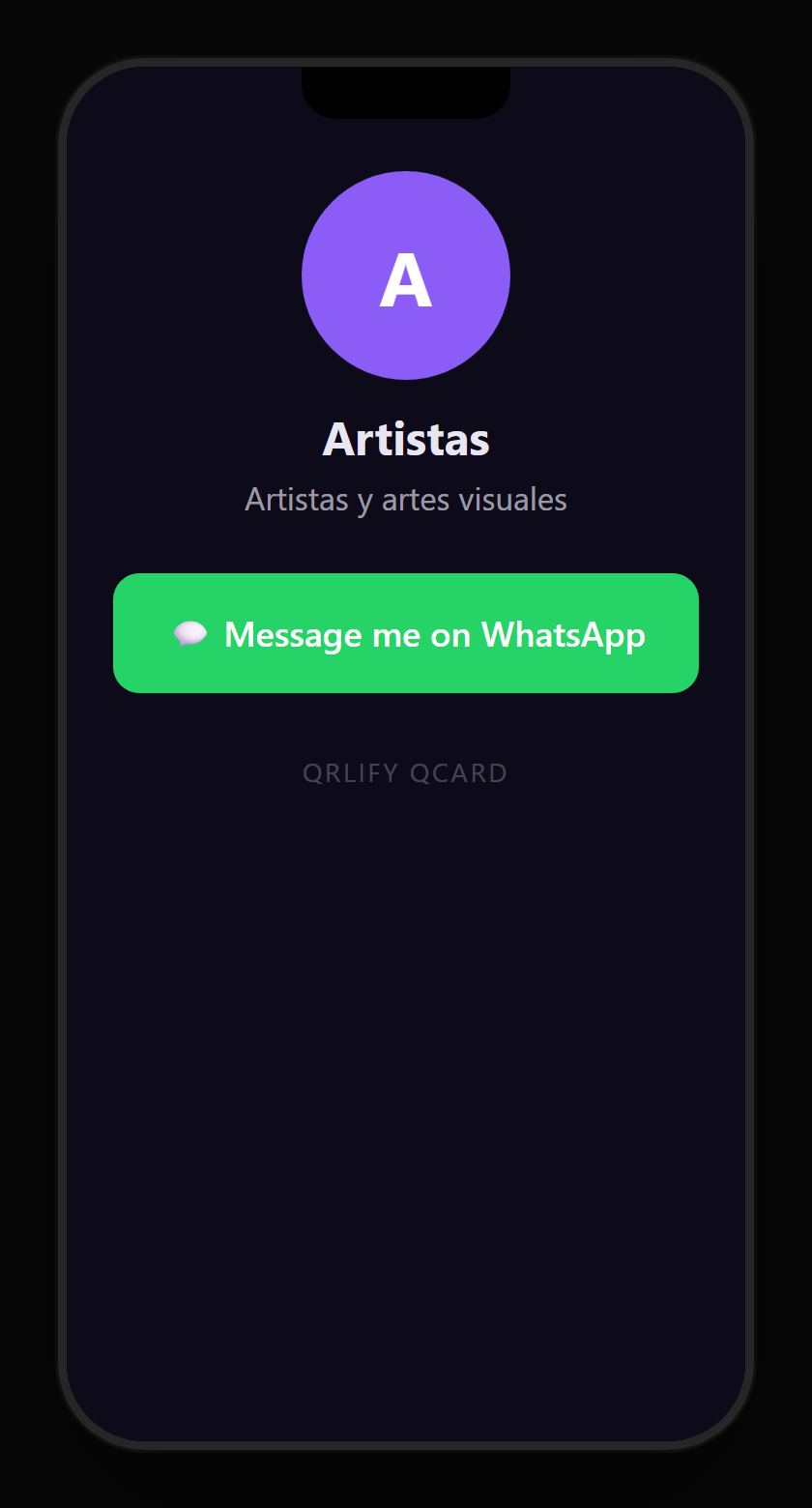
A QR code leads to one place. A QCard is a page of yours with several buttons: the gallery, the story, the purchase, commissions and your socials.
You point a single code at that page and change the buttons whenever you like. When the piece sells, the code on the stretcher leads to the next series.