Book an appointment
Your calendar, without the round of calls and messages.
Esta página también está en español.
The intake form, filled in before they walk in.
Appointments, history and follow-up, without anyone dictating anything over the phone.

In the waiting room, on the appointment card, on the prescription. Each one with its own code and its own numbers.
Your calendar, without the round of calls and messages.
History and consent, filled in before they sit down.
Training, specialty and registration, on one page.
What you explain ten times a day, in a PDF they can reread.
Dosage and schedule, without relying on them keeping the paper.
Direct contact, with the reason already written.
You change calendar tool, phone number or address, and the cards you handed out and the sign on the door lead to where you no longer are.
And you never learn how many people used it, because it does not pass through anywhere that could count.
The code points at QRlify and QRlify points wherever you say. Change the destination whenever you like and whatever you printed still works.
And because every scan passes through here, it can be counted.
How many scans, and on which days. That shows whether the appointment card gets used or whether people still just call.
The day-by-day and per-campaign detail starts on the Starter plan. The scan count is on every plan.
Pick «Businesses and organisations» and then «Health and private practice». That is enough for us to know what to offer, so you never choose between eighteen types of code.
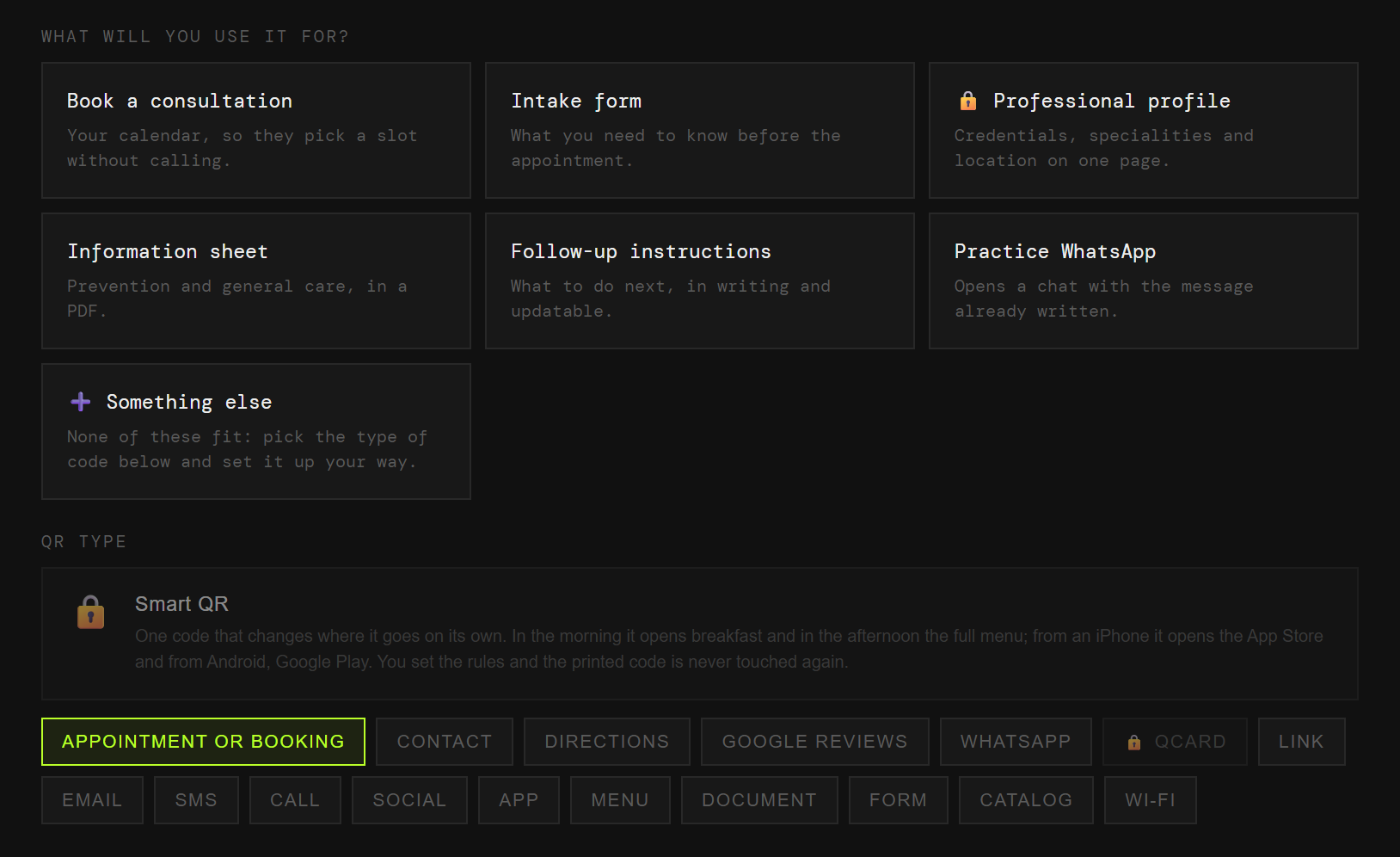
Appointments, intake form, profile, information, follow-up or WhatsApp. Each one arrives with its field ready.
Two colours and, on a paid plan, your logo in the middle. Black on white also works, and scans just as well.
PNG or SVG, at whatever size you need. From then on, anything that changes you change from the dashboard.
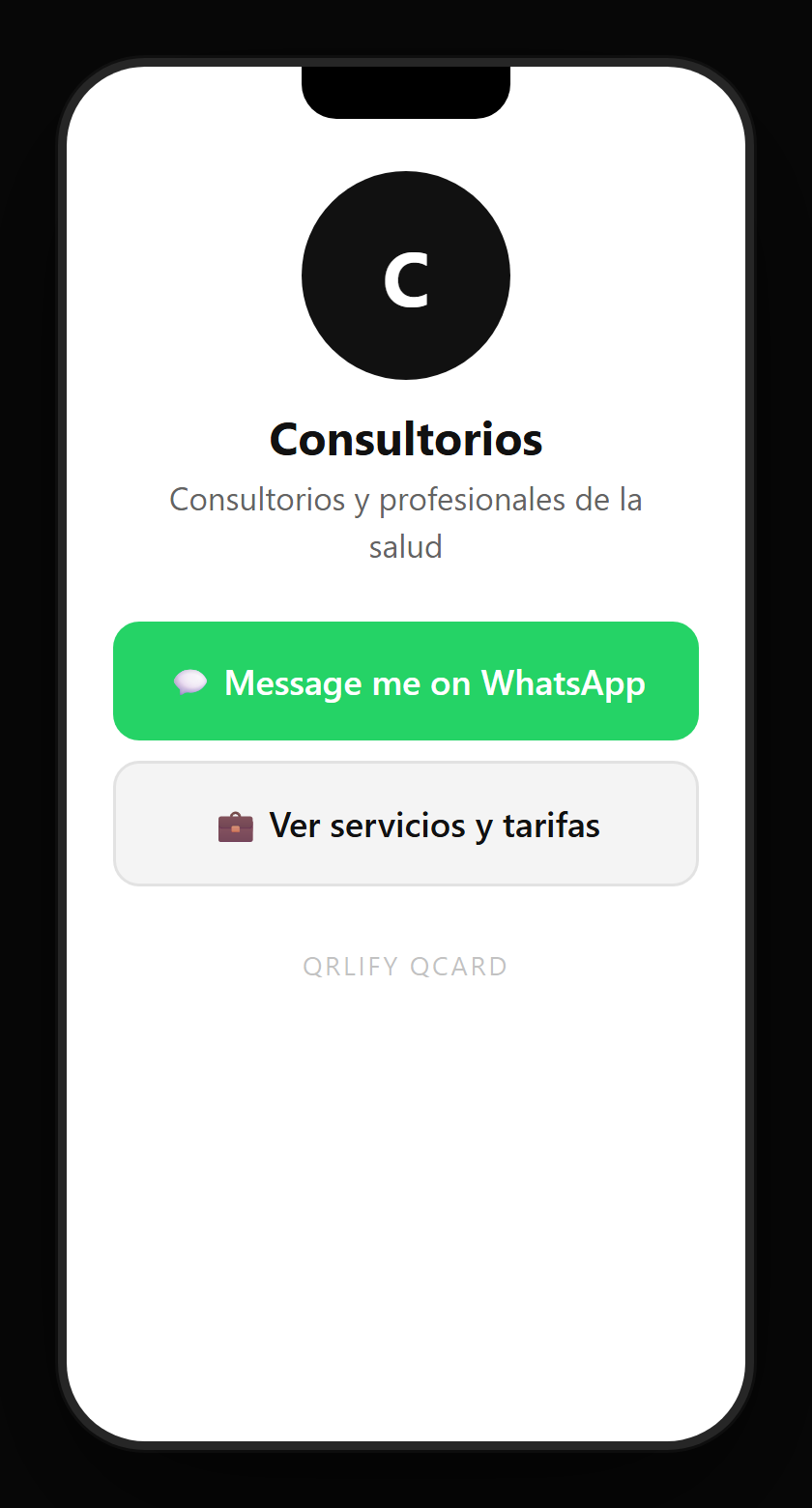
A QR code leads to one place. A QCard is a page of yours with several buttons: booking, the intake form, how to find you, your WhatsApp and the handouts you usually give.
You point a single code at that page and change the buttons whenever you like. A change of calendar or address does not mean reprinting cards.